
27 July 2026
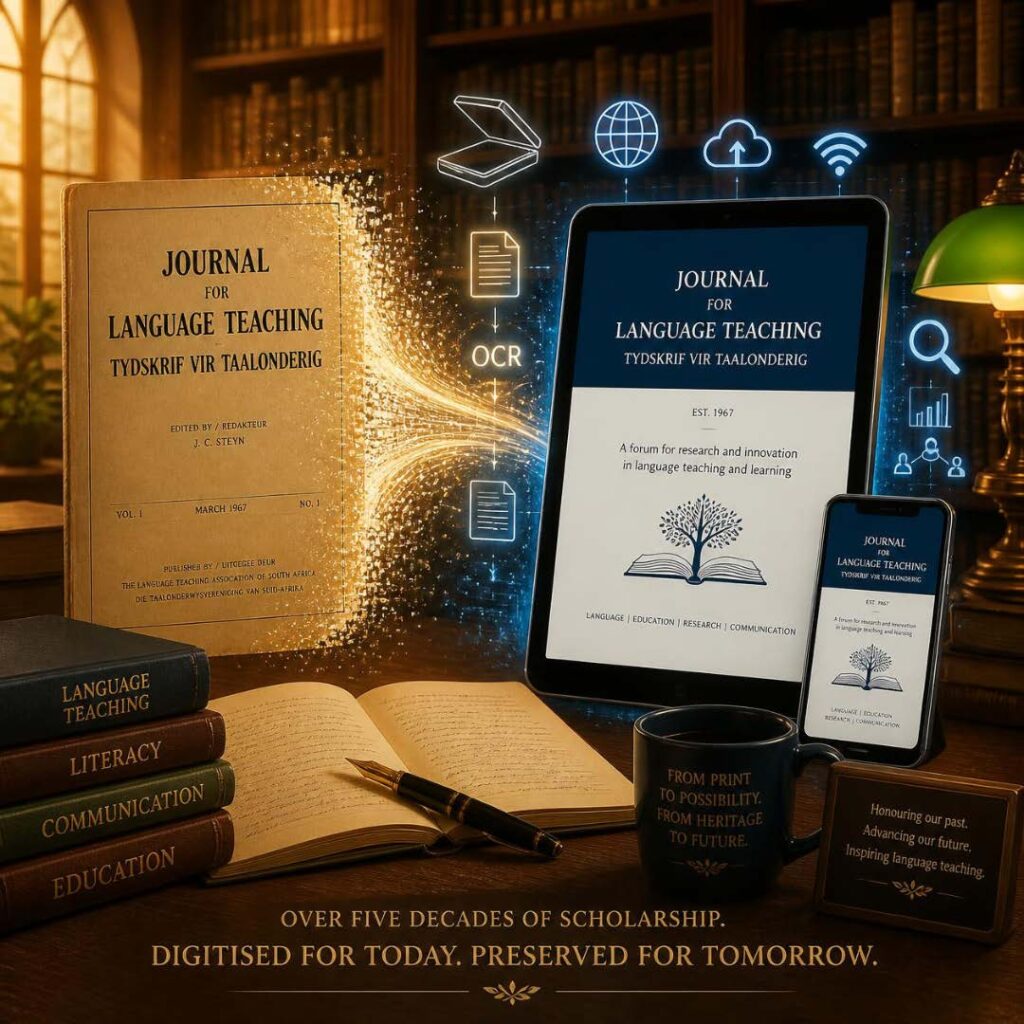
The South African Centre for Digital Language Resources (SADiLaR) is proud to support the preservation and long-term accessibility of South Africa’s language teaching scholarship through the digitisation of historic editions of the Journal for Language Teaching (Tydskrif vir Taalonderrig).
As part of its commitment to advancing multilingualism and strengthening digital language resources, SADiLaR has funded the digitisation of the journal’s printed editions published between 1977 and 2000. The initiative forms part of SADiLaR’s broader digitisation strategy, which seeks to preserve valuable language-related resources while making them more accessible to researchers, educators, students and future generations.
The project originated after researchers discovered that the journal’s editions published before 2001 had never been digitised. While conducting a study on the journal’s research themes and collaborations, published in 2024, it became evident that a significant portion of South Africa’s language teaching scholarship remained accessible only in printed format.
Recognising the importance of preserving this scholarly record, discussions between the Journal for Language Teaching, the South African Association for Language Teaching (SAALT), Sabinet and SADiLaR led to a collaborative effort to digitise the missing volumes.
With financial support from SADiLaR, the first phase of the project successfully digitised the available printed editions dating back to 1977 using copies supplied by the University of the Free State. After an extensive search for the remaining historic editions, the missing volumes were in early 2026, allowing the second phase of the project to commence.
Once completed, the digitised collection will provide researchers and educators with significantly improved access to nearly five decades of South African language teaching scholarship. The project will also pave the way for the indexing and online hosting of the complete archive, making the journal’s rich history more discoverable and easier to use for research, teaching and knowledge development.
This initiative reflects SADiLaR’s vision of enabling research through sustainable digital language resources and infrastructure. By preserving historically significant publications and transforming them into accessible digital resources, SADiLaR is helping ensure that South Africa’s linguistic and educational heritage remains available to support future scholarship and innovation. The project also highlights the value of collaboration between research institutions, scholarly associations and digital infrastructure partners in preserving South Africa’s academic record for generations to come.
By: Tshego Rapoo-Maloyi